
• Home
  • Galleries
  • About
  • Blog
    • Photography Explained
      • Evolution of Camera Technology
        • Camera Obscura (1500)
        • The Daguerreotype Camera (1839)
        • The Kodak Brownie (1900)
        • The Reise Camera (1900)
        • The Leica I (1925)
        • The Kodak Duaflex (1947)
        • The Polaroid Model 95 (1947)
        • The SLR
        • The Kodak Digital Camera
        • The DSLR
        • Mobile Camera
        • The Action Camera
        • The Mirror less Camera
      • Understanding Your Camera
        • DSLR Explained
        • Lens Explained
        • Megapixel
        • Shutter
        • Aperture
        • ISO
        • Focus
        • Metering
        • White Balance
        • Image Quality
        • Shutter Release Mode
      • Understanding Exposure
        • Exposure
        • Exposure Triangle
        • Exposure Modes
        • Exposure Compensation
        • Exposure Bracketing
        • Histogram
        • Aperture and Depth of field
        • Shutter Speed and Motion
        • Chromatic Aberration
        • Lens Diffraction
        • Hyper Focal Distance
      • Camera Accessories
        • Tripod
        • Tripod Head
        • Filters
        • Flash
        • Camera Bag
    • Equipment Reviews
    • Travel Stories
    • Tips & Tutorials
      • Photography
      • Travel
  • Contact
FOTOVOYAGE
FOTOVOYAGE
  • Home
  • Galleries
  • About
  • Blog
    • Photography Explained
      • Evolution of Camera Technology
        • Camera Obscura (1500)
        • The Daguerreotype Camera (1839)
        • The Kodak Brownie (1900)
        • The Reise Camera (1900)
        • The Leica I (1925)
        • The Kodak Duaflex (1947)
        • The Polaroid Model 95 (1947)
        • The SLR
        • The Kodak Digital Camera
        • The DSLR
        • Mobile Camera
        • The Action Camera
        • The Mirror less Camera
      • Understanding Your Camera
        • DSLR Explained
        • Lens Explained
        • Megapixel
        • Shutter
        • Aperture
        • ISO
        • Focus
        • Metering
        • White Balance
        • Image Quality
        • Shutter Release Mode
      • Understanding Exposure
        • Exposure
        • Exposure Triangle
        • Exposure Modes
        • Exposure Compensation
        • Exposure Bracketing
        • Histogram
        • Aperture and Depth of field
        • Shutter Speed and Motion
        • Chromatic Aberration
        • Lens Diffraction
        • Hyper Focal Distance
      • Camera Accessories
        • Tripod
        • Tripod Head
        • Filters
        • Flash
        • Camera Bag
    • Equipment Reviews
    • Travel Stories
    • Tips & Tutorials
      • Photography
      • Travel
  • Contact

Aperture is one of the three components in Exposure Triangle.  Aperture is the opening of a lens’s diaphragm through which light passes to the sensor. When you press the shutter release button the aperture hole opens up and allow the light to pass through.

Let’s take a very simple example.  Let’s see how similar human eyes are with the construction of camera lens. You see the front element of your lens, its cornea. It gathers lights and passes it to iris. The iris expands and contracts according to the intensity of light. If the light be bright, the iris contracts. If the light is low, the iris expands. The hole that lets in the light in the middle of the eyes iris is the pupil.  Therefore a pupil in human eye is similar to aperture in a camera.
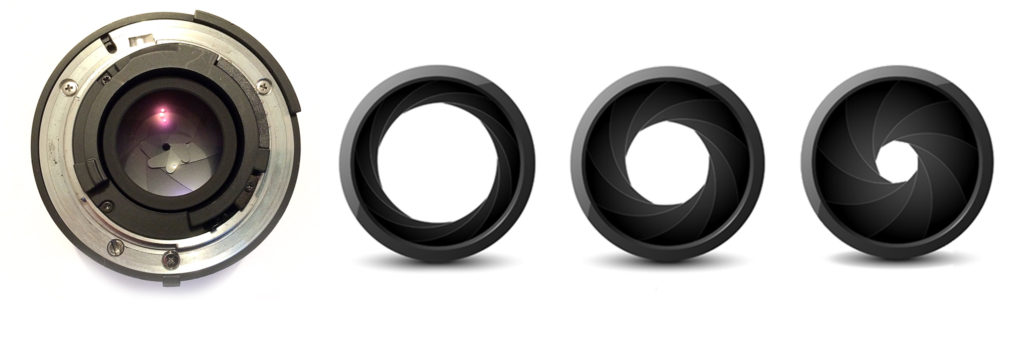
Size of the aperture is controlled either manually or by programming done inside the camera.  The size is controlled by diaphragm.  Aperture is expressed in f number, for example f/2.8 or f/4. The f number or f-stop describes the size of the aperture. The smaller f number means larger aperture and larger f number means smaller aperture.  The f number of a lens is the ratio of its focal length divided by the diameter of the aperture. Doubling or halving the area of the aperture respectively doubles or halves the amount of the light entering the lens. Given below are the f numbers that constitutes one stop difference.
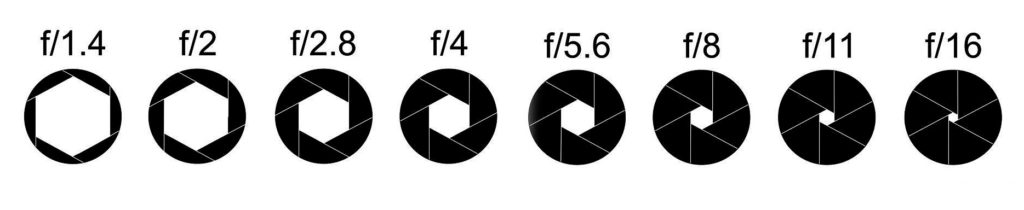
It looks rather confusing to remember but there is a small trick to understand this.  Take two f number as base. f/1 and f/1.4. Multiply both of them by as explained in the below example.

  • Share On Facebook
  • Tweet It


  • Transform Your Imagination to Imagery.

  • Please authorize with your Instagram account here
  • Follow Us On


© 2027 Copyright FOTOVOYAGE | All Rights Reserved